 phoenixtax January 27, 2021
Form 16 is an important document for salaried taxpayers in India. It is a Tax Deducted at Source (TDS) certificate on salary, issued by an employer to an employee.
It contains details of salary income, eligible exemptions and deductions reported through the employer, and tax deducted at source (TDS). These details help in computing the employee’s final tax liability or refund while filing the Income Tax Return (ITR).
What is Form 16?
Form 16 is a certificate issued under Section 203 of the Income Tax Act for tax deducted at source from salary.
If TDS has been deducted from your salary, Form 16 provides an important summary of your salary and TDS information for the relevant financial year.
Form 16 generally contains:
- Employer and employee details
- PAN of the employee
- TAN of the employer
- Salary details
- TDS deducted from salary
- TDS deposited with the Government
- Exemptions and deductions, where applicable
- Taxable income
- Tax payable or refundable computation details
Form 16 downloaded through TRACES is used for reporting and verifying salary TDS information.
Who Issues Form 16?
The employer issues Form 16 to the employee for salary income where applicable.
If an employee worked with more than one employer during the financial year, Form 16 information from the relevant employers may need to be considered while preparing the Income Tax Return. Official Form 16 instructions specifically address cases involving multiple employers.
Form 16 – Part A
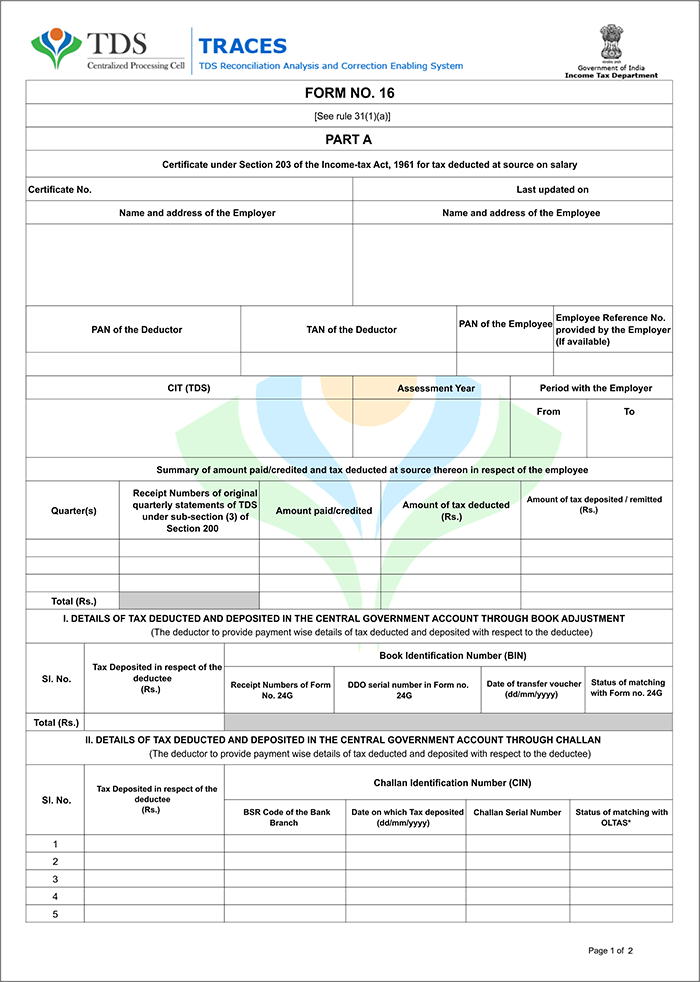
Part A mainly contains information relating to the employer, employee and TDS deducted and deposited.
Important details include:
- Name and address of employer
- Name and address of employee
- Employer TAN
- Employee PAN
- Assessment Year
- Period of employment
- TDS deducted
- TDS deposited with the Government
Before filing your ITR, verify that your PAN and employer details are correct and that the TDS information is properly reflected.
Form 16 – Part B
Part B is the annexure containing detailed salary and tax computation information.
Depending on the applicable case, it contains information such as:
- Gross salary
- Salary components
- Exempt allowances, where applicable
- Deductions considered by the employer
- Taxable income
- Income-tax computation
- Tax deducted at source
Part B should be read together with Part A while preparing the Income Tax Return. Official Form 16 instructions provide for Part B as the annexure to the certificate.
Form 16 vs Form 16A
Form 16 and Form 16A are different TDS certificates.
Form 16 relates primarily to TDS on Salary.
Form 16A relates to TDS on income other than salary, such as certain interest, professional or other payments where TDS provisions apply.
The Income Tax Department identifies Form 16A as a quarterly TDS certificate for non-salary income.
Form 16 vs Form 26AS and AIS
Do not file your Income Tax Return based only on Form 16.
Before filing, salary taxpayers should also verify relevant information with Form 26AS and AIS (Annual Information Statement).
Form 26AS provides TDS/TCS information, while AIS can contain broader tax-related information including TDS/TCS, specified financial transactions, tax payments, demand/refund information and other reported information.
If Form 16 shows TDS but the corresponding credit is not properly reflected, the difference should be checked before filing the return.
How to Use Form 16 for ITR Filing
Form 16 is one of the important documents used for preparing a salaried taxpayer’s Income Tax Return.
Before filing:
- Verify your PAN in Form 16.
- Check salary details.
- Verify TDS deducted by the employer.
- Compare TDS with Form 26AS.
- Review AIS for other reported income and transactions.
- Include other taxable income not appearing in Form 16, where applicable.
- Select the correct ITR form.
- Calculate final tax payable or refund.
- File the Income Tax Return and complete applicable verification requirements.
The Income Tax Department’s ITR-2 guidance specifically lists Form 16 for salary income and recommends Form 26AS and AIS for verification of TDS information.
Is Form 16 Enough to File an ITR?
Not always.
Form 16 mainly provides salary-related information reported through the employer. A taxpayer may also have:
- Bank interest
- Fixed deposit interest
- Rental income
- Capital gains
- Dividend income
- Income from other sources
- Other taxable or reportable transactions
Therefore, Form 16 should be reconciled with AIS, Form 26AS and other relevant financial records before the return is filed.
What if Form 16 Contains an Error?
Check important details such as:
- PAN
- Name
- Salary figures
- TDS amount
- Employer TAN
- Tax computation
- Exemptions/deductions considered
- Form 26AS TDS credit
If employer-reported information is incorrect, contact the employer/deductor and get the relevant correction made where required.
Do not simply copy incorrect figures into the Income Tax Return.
Form 16 and Tax Regime
Form 16 may contain salary and tax computation information based on the tax treatment applied by the employer.
However, the final Income Tax Return should be prepared according to the tax provisions applicable to the taxpayer for the relevant assessment year.
The tax regime, eligible deductions, exemptions, other income and tax credits should therefore be reviewed before filing.
Why Form 16 Reconciliation is Important
A proper ITR filing process should not rely on only one document.
Before filing, reconcile:
Form 16 + Form 26AS + AIS + Bank/Income Records + Other Income Details
This helps identify missing income, TDS differences and other discrepancies before submission.
Need Help with Income Tax Return Filing?
If you have Form 16 but are unsure about your salary income, TDS credit, AIS/26AS differences, tax regime, other income or refund calculation, professional review can help avoid filing errors.
Phoenix Tax Services provides Income Tax Return filing support for salaried taxpayers in Tambaram and Chennai.
👉 ITR Filing Support:https://www.phoenixtax.in/itr/
📞 99403 49819 | 88072 58797
📍 Phoenix Tax Services, Tambaram, Chennai
Frequently Asked Questions About Form 16
What is Form 16?
Form 16 is a TDS certificate relating to salary, issued by an employer to an employee. It contains salary and tax-deduction information useful for computing the employee’s income tax liability or refund.
Is Form 16 mandatory for filing an ITR?
Form 16 is an important document for salaried taxpayers where it is issued, but the ITR should not be prepared solely from Form 16. Other income and information appearing in AIS, Form 26AS and financial records may also need to be considered.
What is the difference between Form 16 and Form 16A?
Form 16 relates to salary TDS, whereas Form 16A is a TDS certificate for specified non-salary income.
Should Form 16 be matched with Form 26AS?
Yes. TDS information should be checked against the available tax-credit information before filing the return.
Should AIS also be checked before ITR filing?
Yes. AIS contains broader information reported to the Income Tax Department and should be reviewed along with Form 16 and Form 26AS.
Can I have more than one Form 16?
Yes. If you worked for multiple employers during the year, Form 16 information from the relevant employers may have to be considered.
Find the structure new form no 16 images part –A below
The Part-B is the annexure of Part- A.
It contains details concerning your gain from wage and alternative heads.
Financial gain from wage is entered by the employer himself from your payslips and alternative incomes are entered from the main points provided by you to the employer. Generally, these are financial gain from house property and financial gain from alternative sources. It additionally contains the main points of assorted deductions and tax savings provided by you to your employer.
The Part –B associate combination of your payslips. So, you need to verify the entries partly with those in payslips. The taxes paid details herein the tax amounts subtracted by your employer and deposited with the govt. whether or not the employer has shown correct tax or not will be verified by cross-verification with form26AS of yourself that can also be downloaded from the TRACES portal. This should contain all the deductions that you just told your leader before he subtracted your tax. Just in case of any discrepancy, you need to contact your deductor and acquire the amended kind sixteen.
Finally, all employees should understand the concept of form no 16 to track their salary deductions and returns to have a correct financial following. Few companies may follow various proportions in deducting the salary from the employees and this cannot be understood as earlier, you may contact the tax consultants in Chennai to make your doubts clear
